Top Money-Saving Tips When Shipping Your Car
Published

Car shipping is priced per shipment, which means most of the cost is decided by choices you make before you book. Some of those choices save real money with no downside. Others save a little and cost you a lot in reliability. Here are the ones that work, roughly in order of how much they matter.
1. Choose open transport unless the car needs enclosed
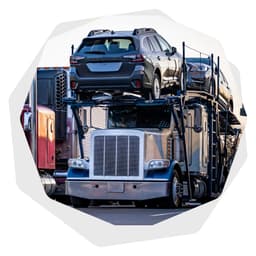
Open carriers move the vast majority of vehicles in the United States, including brand-new cars on the way to dealerships. Enclosed transport uses a small, specialized fleet and costs materially more. Reserve it for collector, exotic or very high-value cars. The comparison is on our open vs enclosed page.
2. Give a flexible pickup window
A window of several days lets dispatch place your car with a carrier already running your lane. A single fixed date means paying a carrier to change its route. Our calculator shows the difference as you move the pickup-window slider, so you can see exactly what flexibility is worth on your route.
3. Book ahead of peak season
Summer and the snowbird months push prices up on busy lanes. Booking two to three weeks ahead in those periods gives you more carrier options at better rates. The yearly pattern is explained in our article on seasonal fluctuations in auto transport.
4. Ship with the flow, or against it, deliberately
Lanes are directional. In November, cars pile up heading to Florida and Arizona; in April they head north. Going against the seasonal flow is cheaper because carriers are looking for loads to balance their trucks. If your dates are flexible by a few weeks, the difference can be significant.
5. Pick up and deliver near a major route
Carriers run between metro areas along the interstates. A pickup in a small town far from the highway may require a detour that you pay for. If you can meet the driver at a large parking lot near the interstate, or at a relative’s address in a bigger city, say so when you quote.
6. Pay with cash, Zelle or ACH
Card processing has a cost, which is why our quote shows a cash price and a non-cash price. Choosing cash, Zelle, ACH or certified funds is the simplest saving on the list.
7. Describe the vehicle accurately
This does not lower the quote, but it prevents the most common surprise charge. A car booked as running that does not start needs a winch and costs more at pickup. A lifted truck booked as a standard pickup may not fit the position reserved for it. Tell us about modifications, condition and dimensions up front; see inoperable vehicle shipping and oversized vehicle shipping.
8. Keep personal items within the limit
Under our terms up to 100 pounds of personal items may ride in the trunk or below the window line at no charge if declared. Above that, carriers may refuse the items or charge by the pound, and personal items are never insured. Ship belongings separately and keep the car a car.
9. Ship two vehicles together
If a household is moving two cars, booking them together with the same pickup window often lets both ride on the same carrier, which saves the carrier a stop. See multiple vehicle shipping.
10. Compare quotes properly
Make sure every quote is for the same carrier type and the same pickup window, ask whether the price is binding or an estimate, and check the company’s MC number on the FMCSA website. A quote well below the others is usually a load no carrier will take, which means a car that sits. Our cost guide explains how to compare.
Savings that are not worth it
- Choosing the lowest quote blindly. The price you pay for a bait-and-switch is weeks of delay and often a higher final number.
- Skipping the pickup photos to save time. They cost nothing and are the only thing that supports a damage claim.
- Booking an unlicensed operator. No bond, no verified insurance, no recourse.
- Terminal-to-terminal to save a few dollars when the terminal is far from you and charges storage. Door-to-door is usually the better value; see door-to-door auto transport.
Get a price that already reflects these choices
The instant quote calculator lets you set the carrier type, the pickup window and the payment method and see the effect of each. For advice on your specific lane, call (208) 500-0400.